Globally Recognized Certifications & Standards

Globalization has shrunk the world to an extent where we can see its impact in numerous instances in daily life. We use laptops and PCs for instance, which are assembled in China, with parts/subassemblies sourced from local and international manufacturers spread across the globe. When an Original Equipment Manufacturer (OEM) depends on a globally spread supply chain, it becomes imperative to ensure that the suppliers adhere to a well defined set of quality standards and organizational best practices.

Best practices that have an impact across the organization can fall under several functional areas: Quality Management, Environmental Safety, Organizational Health, Information Security, Process Improvement, Energy Management, Social Accountability, and so on.

Just as there are so many areas under which best practices can be categorized, organizations could look at several standards and certifications which establishes guidelines for managing their business effectively. In fact, for parts suppliers and manufacturers to compete in a global economy, they need to demonstrate their commitment to management excellence by getting accredited to globally recognized certifications as is relevant to their business.

Some of the most prominent globally recognized certifications that help organizations position themselves in the global marketplace are highlighted below.

(a) ISO 9001 – Quality Management System (QMS)

The ISO 9001 standard specifies the requirements for a Quality Management System where an organization is able to:

    • Consistently demonstrate its ability to provide products or services that meet customer expectations within the framework of applicable local/regional statutory & regulatory requirements
    • Ensure that its business processes are designed for continuous improvement through effective use of checks and balances to deliver products and services that meet customer expectations.

ISO 9001 standards have evolved over time, and in their current form, draw the focus towards achieving customer satisfaction. The accreditation process for ISO 9001 now measures the extent to which business processes as defined by the organization will be able to achieve customer satisfaction.

Benefits of ISO 9001 accreditation include:

  • Gives visibility to the senior management through an efficient quality management process
  • Clearly defines the areas of responsibility and accountability across the organization
  • Identifies and develops more efficient and time saving processes
  • Highlights process deficiencies, and thereby areas for continuous improvement
  • Reduces operational costs

(b) ISO 14001: Environmental Management Systems (EMS)

The ISO 14001 is a standard for environmental management systems applicable to all businesses. The objective of this standard is to reduce the environmental footprint of a business and to decrease the pollution and waste that a business produces.

The ISO 14001 standard can be adopted by any organization that seeks to improve the environmental impact of their business operations. This standard is of particular importance to large multi-national, multi-site companies, manufacturing, process and service industries across all industry sectors.

The benefits of ISO 14001 accreditation include:

  • A more proactive and measured process for environmental sustainability across the supply chain
  • Enhanced levels of waste reduction
  • Enhanced level of employee health and welfare
  • Reduced impact of business operations to the surrounding environment
  • Adherence to regulatory requirements on environmental impact

(c) ISO 27001 : Information Security Management Systems (ISMS)

The ISO 27001 standard is largely targeted towards IT/Software and Systems engineering companies. The information security controls in a business operation typically address important aspects of Information Technology or data security. In today’s connected world, information present in the IT infrastructure of organizations is one of the most valuable assets. Information assets are held by organizations on behalf of their customers, by virtue of providing them business services

It thus becomes imperative for organizations to ensure that:

There exists a robust process to examine the organization’s information security risks, taking account of the threats, vulnerabilities and impacts
Designs and implements a coherent and comprehensive suite of information security controls and/or other forms of risk treatment (such as risk avoidance or risk transfer) to address those risks that it deems unacceptable
Adopts an overarching management process to ensure that the information security controls continue to meet the organization’s information security needs on an on-going basis

(d) Organizational Health and Safety Assessment Standard (OHSAS) 18001

The OHSAS 18001 is a non-ISO standard which deals with how Occupational Health and Safety of employees, contractors and visitors in an organization is effectively managed. The OHSAS standard draws attention of organizations to the potential risks/occupational health and safety hazards that persons can encounter during the course of their duties in the organization. It also helps organizations identify the regional regulatory and legislative requirements with respect to Occupational Health and Safety

.
The OHSAS standard is compatible with ISO 9001 and ISO 14001 standards, and can hence be approached from the traditional Plan-Do-Check-Act sequence of implementation.

Organizations accredited to the OHSAS standard derive the following benefits:

  • Reduce the exposure of employees and other parties to occupational
  • health and safety risks associated with their business activities
  • Potential reduction in resultant costs
  • Greater assurance of conformance with occupational health and safety guidelines
  • Demonstration of conformance to third parties, and of due diligence generally
  • Consistent and proven management approach to health and safety, present and future
  • Deployment of method for continual improvement of the occupational health and safety management system

(e) Software Engineering Institute – Capability Maturity Model (SEI-CMM)

The CMM Process Improvement & Certification process enables software product organizations and software services companies to benchmark their processes at five levels:

  • Level 1-Initial: Processes unpredictable and poorly managed
  • Level 2-Managed: Processes defined by nature of projects and is reactive
  • Level 3-Defined: Processes defined by the organization, and are reactive
  • Level 4-Quantitatively Managed: Processes are measured and controlled
  • Level 5-Optimizing: Organisational focus is on process improvement; defect prevention

Each of these levels could be attributed to software product companies, in which case the applicable model is referred to as CMMI-Product & Service Development (CMMI-DEV). Where it is to be attributed to Software Services, it is referred to as CMMI-Service Acquisition and Management (CMMI-SVC).

The certifications mentioned above some of the most prominent ones that apply to a wide spectrum of industries. There are other certifications, sometimes derived/extended from the parent ISO QMS that deal with Energy Management, Safety in Food Manufacturing, etc. Likewise, organizations could also look at Six Sigma based approaches for process improvement.

The common denominator amongst all certification programs is that they demonstrate the existence of well-defined management approaches to running all the business processes in an organization. By virtue of being globally recognized, these certifications help organizations position themselves in the global supply chain.

Startup Xperts is a Business Growth and Consulting company with an objective to transform CEO’s growth vision into realistic, strategic, actionable plans that delivers results. Startup Xperts supports enterprises through business strategies, goal setting, sales and marketing set up, developing a high performance sales engine, digital marketing, specialized trainings, executive coaching and leadership hiring. Whether the organization wishes to move forward with ISO / CMM certification or have systems and processes that are world class, equivalent to ISO/CMM standards, Startup Xperts provides its expertise in getting these organizations ready for this initiative in a highly efficient and a cost effective way.
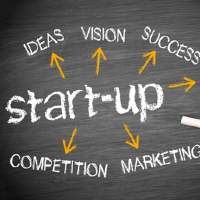

How startups and SMEs can succeed in today’s ecosystem?

Being in a startup ecosystem has never been as exciting as it is today. The opportunities are abound and there is room for many to play in this space. The top cities that produce tech startups are Bangalore, NCR, Mumbai, Chennai, and other fast emerging cities.

Innovation is the order of the day. Disruptive technology and disruptive business model are the new age mantra for exponential growth.

Over 90% of startups fail. Almost over 50% of startups do not last beyond one year. 8 out of 10 startups kick start through their savings.

The fund raising options have improved but still not many do have access to the investors, or unable to spot opportunities to pitch their idea in the right forum to get funded. So there are quite a few challenges that a startup undergoes before they get to the success bandwagon.

In spite of plethora of challenges that startups have to surmount, our country is buzz with ‘startups’. Thanks to our Central Government’s initiative in bringing a separate focus on this startup industry. Recognizing that this industry needs to be nurtured to propel its way to become a super power, it is heartening to see policy initiatives to support startups in India. Today the younger generation is ready to take risks, which has been a change in the outlook compared to the risk-averse previous generation.

How can startup leverage to make their mark and be successful?

There can be so many factors that could decide the success for a startup. But some of the below aspects can certainly help these startups to increase their success quotient.

First issue is of validation; developing products, services, without validating if there is a market, demand for their product/service. Well, in a blue ocean strategy where you are trying to capture new frontiers, or come up with disruptive technology, then the validation process has to be different; not just the research, but understanding the pain points or gain aspects for any consumer. This can reasonably decide if there is a product-market fit for you to launch.

As I have always quoted that mentoring should be effective in order for startups to increase their success ratio.

There are many incubators, and also accelerators, but rare to find a combination with also an effective, continuous mentoring/guidance for the startups. Some investors do receive an investment seeking proposal every other day, and in spite of short-listing 100’s of ideas, the startup they invest may or may not provide them the desired results. Even from many investors standpoint, the ratio of success seem to be 1:6 or 1:7, meaning 1 in every 6 or 7 startup will grow significantly that would offset the loss of other ventures.

So, though the risk factors are high, be it for the startup founder, or an investor, the market is still very exciting that the inspiration is drawn from the successful startups for the new breed to follow their path.

Yet another aspect that most startups miss out is in creating a niche for their product/service. You can also term it as ‘branding effect’. Brand is not what you think you are, but what others perceive about you. It starts from your identity, like the logo, the website, the collaterals, your presence online, social media, etc. All have to be in a single thread so that what you speak and what you standby should be the same, in whatever dimension it is seen from.

Creating differentiator is also a challenge that most startups grapple with. Startups need to understand that in order to win a race one need not necessarily be miles ahead, but just nose ahead. Many startups tend to spend a lot of time trying to create a big differentiator and miss out on precious time. Time lost can be a bigger opportunity lost. In startups, timing matters a lot. In spite of idea being great, differentiator being unique, and the product/service can still fail since it could be out of sync with the timing factor (too early or too late?).

Marketing and positioning is another key factor that can decide a startups fate. Digital marketing has to be pursued by every tech startup without fail. The reach can be significant and every penny spent in this initiative can be tracked to find what works and what does not. It is also about sound and smart execution that determines the success factor. Best is to have a startup business consultant (business advisor) on your board, who can ensure that you are taking the right steps and executing it right!

The ecosystem is certainly getting better by the day, but the pace of support is slow considering the growth and opportunities that Indian startups can exploit. With a right combination of great mentoring, good business, marketing strategies, and with a great team, the execution can take startups to much higher levels. It’s time to facilitate by creating such an ecosystem which in turn can contribute to the growth of our GDP, and also creating millions of employment opportunities in the coming years.

Building startups, enterprises, with passion! Happy startuping!

Startup Xperts is a business accelerator supporting startups, small medium enterprises, boutique firms, by driving their go-to-market strategies, digital marketing, smart sales initiatives, to accelerate their revenue growth.

To know more about Startup Xperts, visit us at www.startupxperts.com or write to us at info@startupxperts.com

The views expressed in this article are that of the author’s and Startup Xperts is not responsible for this content. In case of any objection in content, IP violation, incorrect or inappropriate information, please inform us at ceo@startupxperts.com. We will do our best to act on it at the earliest.

Startup Accelerators – why and what is expected ?

India has become one of the world’s favourite ‘startup’ destinations. The numbers say it all!

  • Over 4200 new age companies have come up during the last year. As per NASSCOM’s statistics we have over 3100 startups in IT (as of last year) and expected to have 11,500 startups by 2020.
  • Being the youngest startup nation, and 2 out of every 3 founders are under 35 years.
  • Almost $5 billion worth funding has been pumped into Indian startups in 2015.

Well the stats can go on, but the key point to consider here is that the environment has never been better for a great startup ecosystem to get built. At a time, while the rapid rise is on for the startup industry, how long can it LAST and how many of those can actually SCALE?

Well the stats can go on, but the key point to consider here is that the environment has never been better for a great startup ecosystem to get built. At a time, while the rapid rise is on for the startup industry, how long can it LAST and how many of those can actually SCALE?

Many startups face challenges in even having an office space for their work. With limited funds, lot many of them cannot afford a proper working space and address. Here comes incubators who do provide co-working space for startups and this trend is picking up across various cities over the past few years.

To facilitate startup ecosystem, there are enablers like TiE, NASSCOM, CII, BYST, etc. who provide a platform for startups and bring together mentors, investors, incubators, and other stakeholders. This is also witnessing increasing tractions, as we can see from the number of such events being conducted across cities.

To ensure that we have a solid startup ecosystem, and one that sustains over long term, is to have good accelerators. So who are, and why, ‘startup accelerators’?

Startup accelerators support early stage high growth companies through incubation, mentoring, investments, and guide them through their journey.

Today, many companies call themselves accelerators but not really sure as to what they offer other than incubation space, and possible networking with investors. I would say, ‘accelerators’ are meant to ‘accelerate the startups’ businesses. Startup accelerators need to ensure that startups tread in the right path, direction, and do course correction when and where required. These accelerators need to have a business model that incentivizes them when these startups perform. This gives both the startups and startup accelerators a win-win proposition.

You might have heard about the famous Y-Combinator in the US. Based in Boston, it was the first seed accelerator program that I know of. They add a lot of value for those startups who have the opportunity to work with them. Accelerators typically have a cycle time of 3-6 months of working with startups.

Startups, in order to increase their success quotient, need more nurturing than before due to dynamic market conditions, shift in technology, disruptive innovation, and many other factors that startups need to be aware of during their journey. The growth can be exponential and at the same time can go down deeply, if they tread on a wrong path.

Startup accelerators need to support today’s young entrepreneurs through incubation, mentoring, connecting with potential investors, perfecting their pitch to investors, and guiding them through their journey. By doing this they certainly can create a positive impact in our society and also help build a better startup ecosystem which is essential for our rising economy.

Startup Xperts is a business accelerator supporting startups, small medium enterprises, boutique firms, by driving their go-to-market strategies, digital marketing, smart sales initiatives, to accelerate their revenue growth.

To know more about Startup Xperts, visit us at www.startupxperts.com or write to us at info@startupxperts.comThe views expressed in this article are that of the author’s and Startup Xperts is not responsible for this content. In case of any objection in content, IP violation, incorrect or inappropriate information, please inform us at ceo@startupxperts.com. We will do our best to act on it at the earliest.

Plenary Speaker at International Mentoring Summit – Rashtrapathi Bhavan, New Delhi

BYST’S INTERNATIONAL MENTORING SUMMIT @ THE RASHTRAPATHI BHAVAN, NEW DELHI

With an aim to support employability initiatives in the country and encourage youth to take up entrepreneurship, BYST (Bharatiya Yuva Shakti Trust), a not for profit organization dedicated to empower underprivileged youth, organized India‘s first International Mentoring Summit from the 4-6 April 2017. The event celebrated mentorship and discussed its impact on the various sectors will also mark BYST‘s glorious 25 years of foundation in the country. Based on the theme ‘Mentoring Grassroots Entrepreneurs in Smart Grams for Inclusive Growth’, the summit held in association with the Rashtrapati Bhavan. With the inaugural on the 5th of April 2017 at the Rashtrapati Bhavan, International Mentoring Summit comprised a day-long conference addressed and attended by reputed dignitaries and ministers, including Shri Venkaiah Naidu, Minister of Urban Development, Shri Suresh Prabhu, Minister for Railways, to name a few. The event also brought together other industry veterans, expert mentors from around 14 countries and BYST‘s entrepreneurs and mentors from different fields, to share their views towards one common goal of achieving sustainable employability. The Honorable President of India, Shri Pranab Mukherjee was chief guest at the occasion.

Speaking on the occasion Ms. Lakshmi V Venkatesan Founding and Managing Trustee Bharatiya Yuva Shakti Trust said, ‘As an organization, BYST has always aimed to intensify its operations across the country and empower the underprivileged youth through mentorship and guidance. It gives me immense pleasure that we have covered a long journey of 25 years where we have touched the lives of so many, and created fine examples of successful enterprises.’

Shyam Sekar S, Founder and Chief Mentor of Startup Xperts delivered a speech on the opening plenary and shared his experiences of being part of BYST and building our entrepreneurship ecosystem. During his speech, Shyam quoted that being a mentor just not helps only the mentee to build and grow their businesses, but the mentor also learns during this process, besides feeling the joy of giving itself. Shyam holds the honorary position as the Chairman of the Mentor Advisory Panel for the BYST’s Chennai cluster.

His mentee Ms Shanmugadevi, Founder of Swasti Support Services was awarded the Best Woman Entrepreneur by the Hon. President of India. She thanked and appreciated her mentor Mr Shyam Sekar who not only helped her build her brand and scale up her business, but also for providing emotional support during the tough times that they faced during Chennai floods. She also thanked BYST for the business loan and free mentoring support with which she was immensely benefited.

There were many sessions that included Gurukul Diaries, Promoting Smart Grampreneurs, how entrepreneurship can empower urban development, free-will discussion by name Guftgu, and the event concluded with a special plenary session with Hon. President of India.